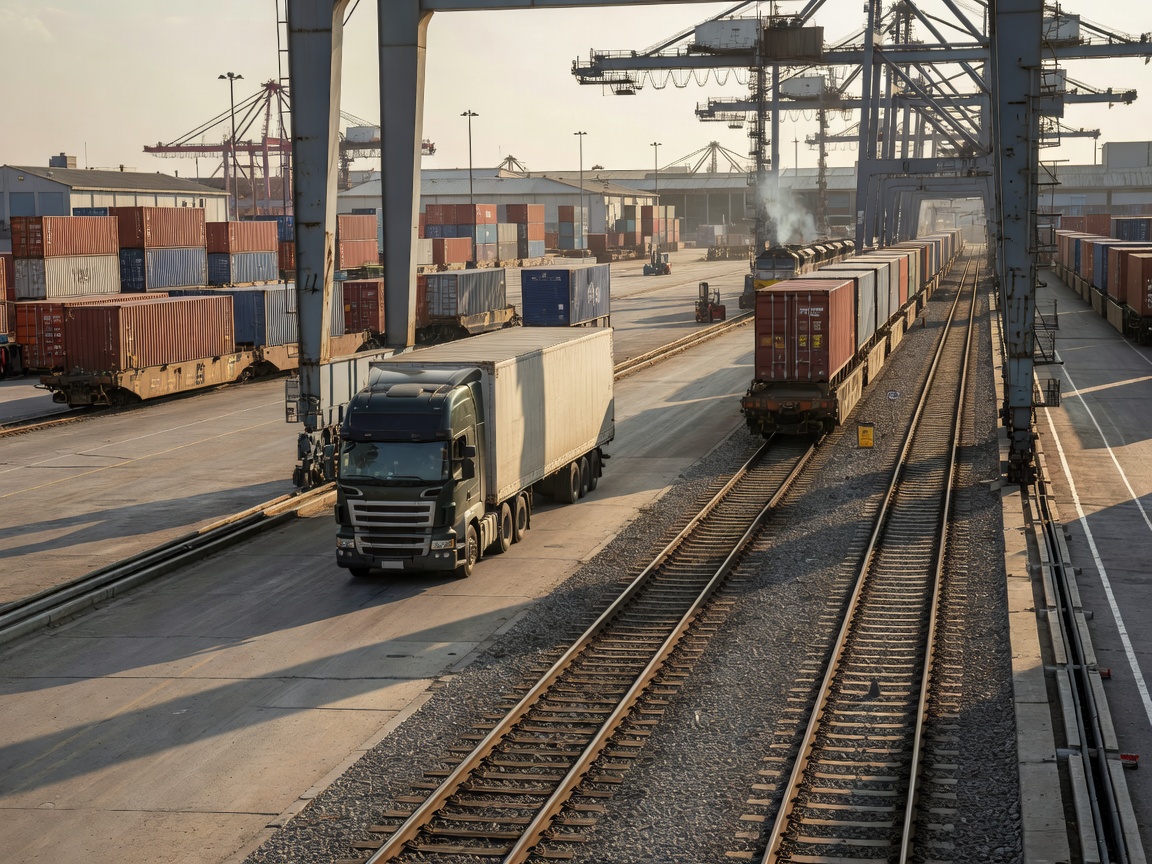
Inland connections determine how cargo leaves the port area and reaches the next node. Road and rail are not isolated alternatives; they may connect with warehouses, distribution centres, inland terminals, transloading sites and final-mile vehicles. The useful option depends on cargo, destination, timing, equipment, service availability and the number of handovers involved.
Road freight
Road freight offers direct collection and delivery flexibility where vehicle access, cargo configuration and route permissions align. Planning should cover vehicle type, loading method, site access, driver and booking requirements, cargo securing, delivery window and applicable cross-border documents. Oversized or heavy loads may require route assessment and permits. Urban restrictions, bridge limits, construction and receiving-site access can affect the plan. Confirm these details with the responsible carrier and authorities.
Road can suit short connections or a final leg after rail or sea movement. It can also become a constraint when collection slots, vehicle supply or congestion do not match terminal release. A realistic plan aligns the gate appointment, loading readiness, driver instructions and receiving capacity. Do not treat an estimated road transit time as a guarantee.
Rail freight and inland terminals
Rail can connect port areas with inland terminals and distribution networks. Suitability depends on track access, loading interface, train service arrangements, wagon type, cargo dimensions, unit availability and the timing of departures. Rail is not automatically available for every cargo or origin-destination pair. Confirm current service options and terminal rules directly.
An inland terminal can act as a transfer, consolidation or storage node. Cargo may move from a port handling unit to a rail wagon, remain in a controlled area, then transfer to road. Each change adds coordination, records and potentially a handling operation. The benefit is strongest when the nodes, schedules and cargo format align. Include the final-mile movement and delivery appointment in the same plan.
Warehouses, distribution centres and transloading
A warehouse provides storage and may support inventory control, consolidation, deconsolidation or preparation for delivery. A distribution centre is generally organised around onward order fulfilment and goods flow. Capabilities vary. Confirm space, access, handling equipment, operating arrangements, cargo restrictions, security and responsibility for records. Do not assume that a facility can accept a particular product or provide specialised conditions.
Transloading moves cargo between transport units or modes. It can be appropriate where an original unit cannot continue, a load must be split, or onward equipment differs. The operation needs clear cargo identifiers, count controls, condition checks, compatible packaging and a documented custody change. Compare transloading with direct movement by considering extra handling, storage, protection and schedule dependencies.
Multimodal planning and timing
A multimodal movement combines two or more transport modes under a planned sequence. Each leg has a handover, schedule dependency and document set. The overall transit plan should include port release, collection window, transfer time, inland departure, terminal dwell and final delivery. Build a buffer around interfaces where one delay could miss the next service. Keep estimated and confirmed milestones distinct.
Storage can absorb timing mismatch but has trade-offs. It uses space, adds inventory control and may require an extra lift or transfer. Direct transfer can reduce dwell and handling but requires close alignment between release and vehicle or train arrival. The right choice depends on reliable coordination, cargo sensitivity, receiving capacity and the cost of delay versus storage.
Cost and route considerations
Inland cost can reflect distance, vehicle or wagon type, cargo dimensions, load factor, transfer count, storage, permits, access constraints and service timing. Additional cost drivers can include waiting, rehandling, equipment positioning or special protection. Ask providers to define scope, assumptions and exclusions. Compare the complete route rather than one line-haul quotation.
Route selection should account for origin and destination, border crossings where relevant, mode-change locations, delivery restrictions and contingency options. A shorter map distance may not be the simplest operational route. Current route availability, service timetables and local restrictions require direct confirmation; this guide does not publish live data.
Connection checklist
- Define origin, port interface, inland node and final delivery address.
- Confirm cargo dimensions, packaging, handling method and equipment needs.
- Check current road or rail options with responsible providers.
- Align port release, collection, transfer and receiving windows.
- Decide whether storage or transloading is required and who controls it.
- Review route restrictions, documentation and contingency arrangements.
Key considerations
Plan the chain end to end. A viable port interface can fail if inland capacity, equipment or delivery timing is not aligned. Include each transfer, storage period and responsible party. Validate current services before making commitments and record which milestones remain estimates.